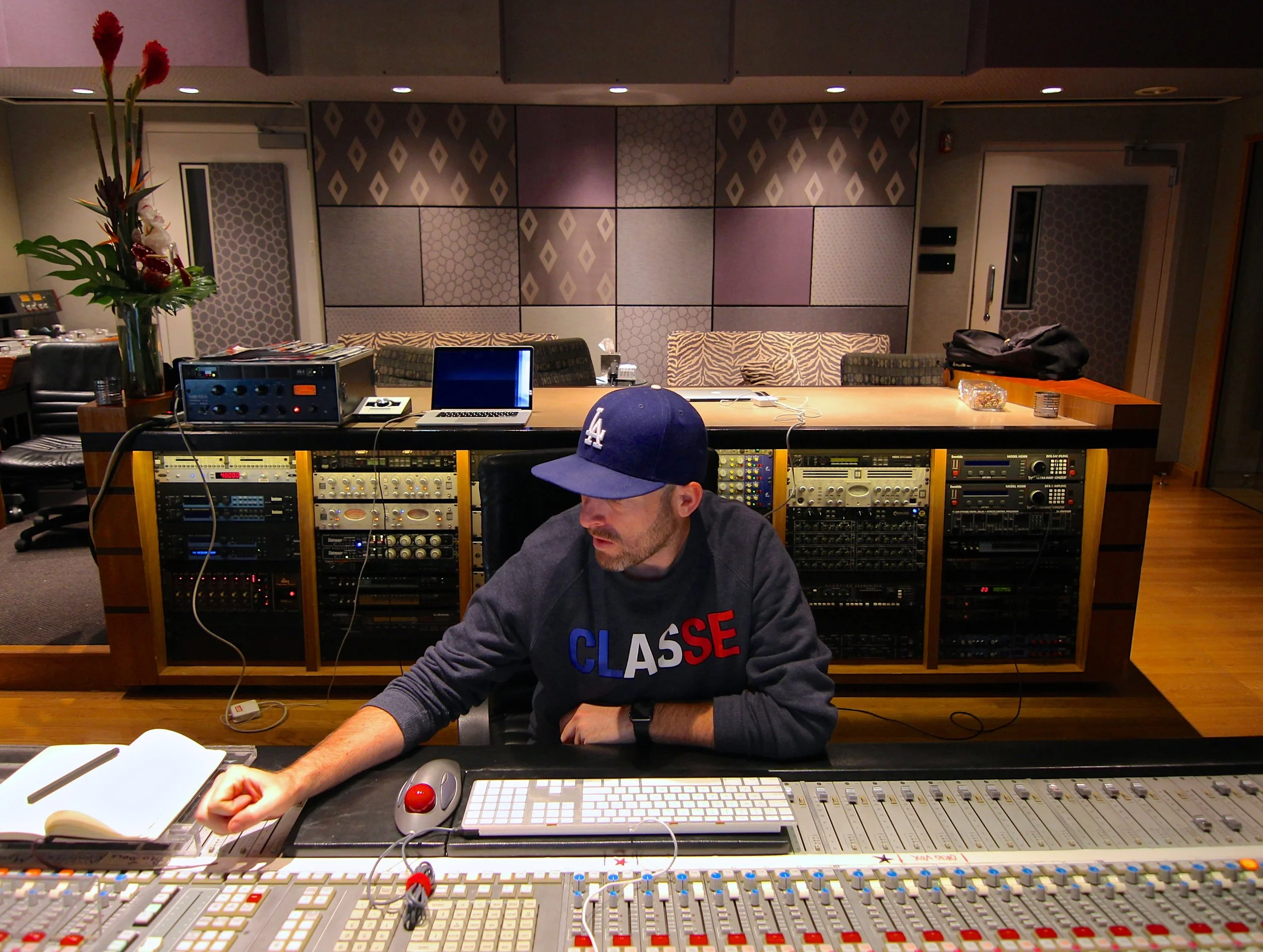
Super Sound Studios in Atlanta
I didn't wait to be discovered. I moved to Atlanta to build a career in hip hop, touring Europe as Phife Dawg's DJ while studying Music Entertainment Management at the Art Institute of Atlanta. At the same time, I pursued an internship at Dallas Austin's DARP Studios with the same persistence that has guided every chapter since. I kept calling. I showed up. I got in. The studio and the business were never separate educations.
Working alongside Dallas Austin exposed me to an unusually broad range of artists and sounds from the beginning. From there, I became part of one of hip hop's most prolific eras as a primary recording engineer for Cash Money Records during the rise of Lil Wayne and the label's defining years. While the technical work was demanding, the instincts I was developing around songs, artists, and creative direction were becoming just as important.
Those instincts expanded during my years with Akon, where I served as primary engineer, vocal producer, mixer, and trusted collaborator throughout his most commercially successful period. The role extended far beyond the console, encompassing creative problem solving, artist development, and strategic decision making. That period led to work involving Michael Jackson and Whitney Houston and began relationships that would shape much of what followed.
The years that followed brought long-term collaborations with Usher, Claude Kelly, BloodPop, and ultimately Nas. Along the way, I contributed to projects involving artists including Lady Gaga, Britney Spears, John Legend, Jessie J, Calvin Harris, and many others. Those relationships eventually led to Mass Appeal Records, where I joined as Senior Director of A&R.
At Mass Appeal, I oversaw a roster that included Nas, DJ Shadow, DJ Premier, Slick Rick, Swizz Beatz, and Ghostface Killah, while also leading A&R across campaigns involving Patrón, Google Pixel, and adidas. My roster drove the majority of the label's new streaming growth and catalog additions during my tenure, reinforcing a philosophy that creative conviction and commercial success do not have to exist in opposition.
Over more than 25 years, I've learned that the best work happens when creative and business perspectives are aligned. I've had the rare opportunity to spend a career moving between the studio and the executive office, developing artists, building relationships, and helping turn ideas into lasting bodies of work.
Today, I continue to work at the intersection of music, culture, and creative leadership, bringing the same instinct that has guided the journey from the beginning: make the best decisions for the work, and everything else follows.